01 / capacity
More work per person
Increase the number of clients, cases, orders, or projects your existing team can handle.
prometha --operational-leverage
Forward-deployed engineers working inside your operation and the tools your team already uses to increase what the business can produce, then build the telemetry that shows what to improve next.
outcomes
01 / capacity
Increase the number of clients, cases, orders, or projects your existing team can handle.
02 / speed
Reduce the waiting, chasing, handovers, and repeated admin that slow work down.
03 / economics
Grow revenue and service capacity without increasing operating costs at the same rate.
04 / quality
Build validation, review, and exception handling into the workflow so speed does not create more errors.
selected work · 001
active-engagement --bi-performance-agency
The agency has its own analytics product with bespoke dashboards for its customers. Its embedded agent connects creative, performance, data, project management and operations, and can turn a collaborative Slack conversation into a finished customer dashboard.
Read the case studyforward deployed
We work alongside your operators, build against the real process, and stay close enough to see whether the system changes the business outcome. We connect to the stack that already runs the operation rather than demanding a transformation project before delivering value.
# not a handover
[observe] real work + edge cases // on the ground
[co-design] operators + engineers "shared model"
[connect] existing tools + data no rip-and-replace
[own] performance after launch measured
+ inside
We sit with the people doing the work, observe the real process, and understand the constraints before deciding what to build.
+ together
Your operators provide the rules, edge cases, and judgement. We turn that knowledge into working software and controlled automation.
+ accountable
We deploy into the existing workflow, watch what happens, fix what does not work, and remain responsible for proving the result.
operational telemetry
Automation creates a new stream of operational evidence. We capture it deliberately so it can improve the automation, the wider operation, and eventually the way the business itself works.
# signals become decisions
[capture] volume + time + queues // flow
[observe] exceptions + corrections "friction"
[connect] actions to outcomes evidence
[discover] constraints + opportunities evolve
+ automation
Exceptions, corrections, and outcomes show where the automation is weak and what should be changed next.
+ operations
Volume, delays, queues, and rework expose bottlenecks, costly handovers, poor allocation, and services that consume more than they return.
+ evolution
Operating evidence can reveal unmet demand, better pricing, new service lines, process redesigns, and different ways for the business to grow.
runbook
No vague transformation programme. One constrained workflow, one baseline, and a result the business can verify.
Work directly with the people doing the job and understand how the process behaves in practice.
Identify the workflow currently preventing the team from handling more business.
Measure current volume, employee time, turnaround, errors, rework, and expected hiring.
Deploy into the tools already in use and capture the signals needed to understand what happens after launch.
Compare capacity, speed, quality, and cost against the baseline instead of declaring victory at deployment.
Use operating evidence to improve the system, remove the next constraint, and identify larger changes worth making.
working relationship
Forward-deployed engineering works because neither side pretends to possess the whole answer. Your operators bring the domain expertise. We bring the engineering, integration, measurement, and optimisation capability.
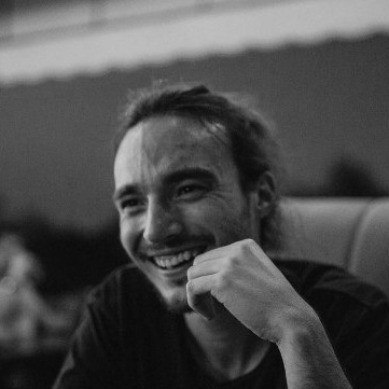
primary operator
Forward-deployed engineer & operational systems builder
I build practical software and AI-assisted systems around real operating workflows. The work starts with the business constraint, not the technology, and is measured by what the team can do afterwards.
darren-bullock.meopen_channel --scope constraint
Show us the workflow, the backlog, or the hire you are about to make. We will help determine whether software and AI can create measurable operating capacity.